Spousal Benefits Explained: What Couples Need to Know
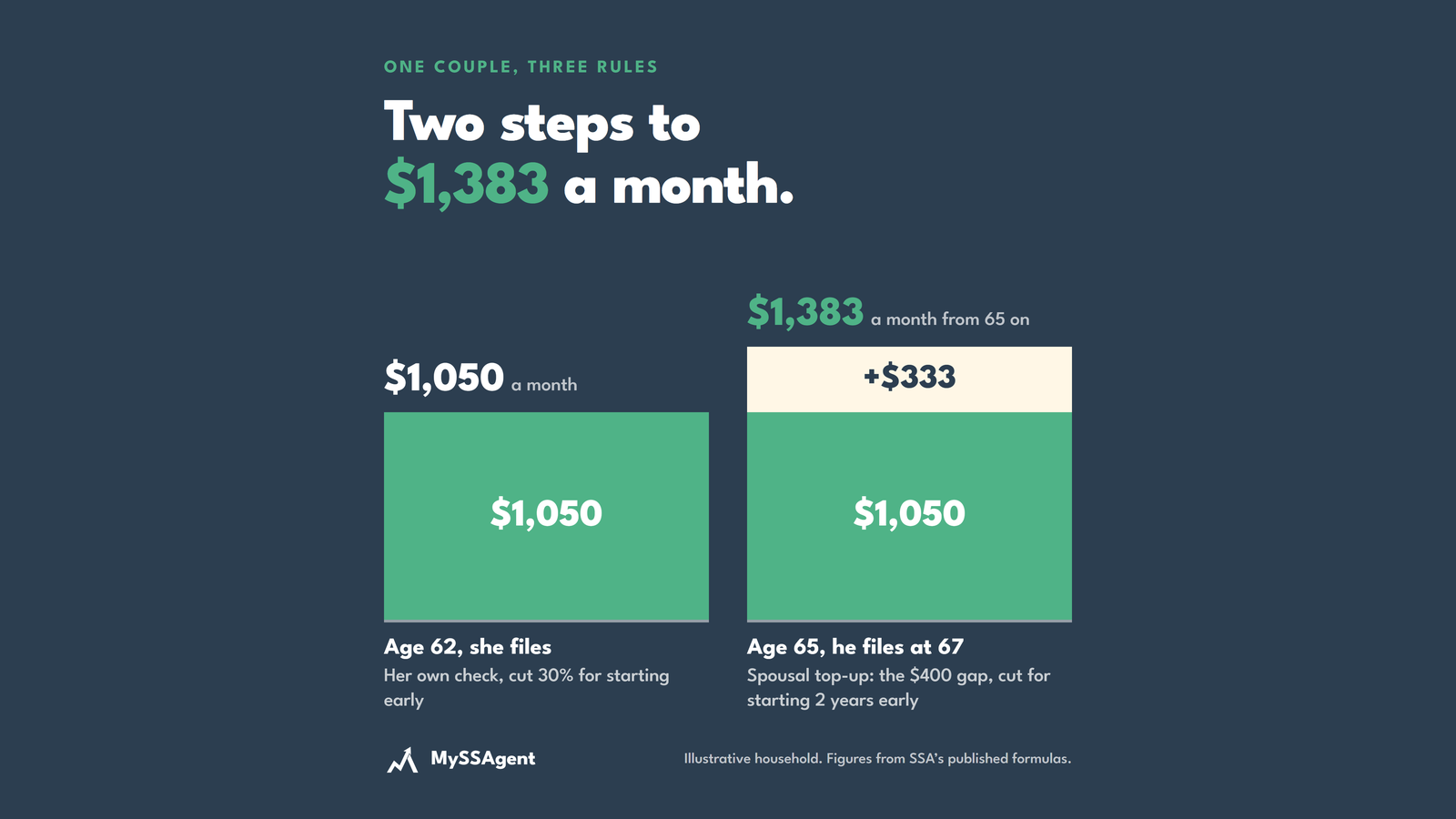
If you're married, divorced, or widowed, spousal Social Security benefits could significantly boost your retirement income. But the rules aren't always intuitive.
The Basics
A spousal benefit lets you claim up to 50% of your spouse's full retirement age (FRA) benefit — even if your own work record would pay less. You don't need to have worked 40 quarters to qualify if your spouse has.
Key Rules to Know
- You must be at least 62 to claim spousal benefits (or any age if caring for a qualifying child)
- Your spouse must have filed for their own benefits first (or you must be divorced)
- Filing early reduces your benefit — just like with your own record
- You can't double-dip — SSA pays the higher of your own benefit or the spousal benefit, not both
Divorced? You May Still Qualify
If your marriage lasted at least 10 years and you haven't remarried, you can claim on your ex-spouse's record. They don't even need to know — and it doesn't reduce their benefit.
Coordination Is Key
The biggest mistake couples make is filing independently without coordinating. One spouse filing early can permanently reduce household income by tens of thousands of dollars. That's exactly what a MySSAgent analysis helps you avoid.
Related reading
- Optimal Social Security Strategy for Married CouplesCoordinate both records — spousal excess, survivor protection, and the claiming-age combinations that maximize the household's lifetime benefit.
- Free Spousal & Survivor Strategy GuideThe printable comparison sheet couples bring to the kitchen table — five strategies, rule by rule.
- The Widow's Gap: A Plan Has to Survive the First DeathDrop 05 — on day one of widowhood the household drops a Social Security check. The plan has to absorb it.
- When “Delay to 70” Breaks: Who Else Is on the Earnings RecordAuxiliary benefits attach to the worker's entitlement, so nobody collects until the worker files — and the family maximum caps the total.
- The $111,000 Mistake 96% of Americans MakeAn estimated $111,000 per household lost to suboptimal claiming (United Income, 2019) — why, and why MySSAgent was built to reverse it.